

Standing Seam Roof Installation in Oman: A Complete Guide to Benefits, Materials & Climate Considerations
Standing seam roof installation Oman is gaining popularity as builders and homeowners seek durable, weather-resistant, and energy-efficient roofing solutions. Oman’s harsh sun, occasional heavy rains, and strong winds mean that choosing the right roof is crucial for any building. In this comprehensive guide, we’ll explore what standing seam metal roofing is and why it’s ideal for Oman’s climate. We’ll discuss the benefits, installation methods, material options, insulation needs, and cost implications. You’ll also learn about the different types of standing seam panels, how the installation process works, and how proper insulation can lead to major energy savings.

Finally, we highlight Metalart Space Frame – a leading local expert in roofing and cladding solutions – and explain how their expertise in standing seam roof installation makes them a reliable partner for your project. Whether you’re a commercial builder, architect, or a homeowner in Oman, this article will provide valuable insights into standing seam roofs and help you make informed decisions for your next roofing project.
What is a Standing Seam Roof System?
A modern home featuring a standing seam metal roof system. Notice the raised vertical seams and sleek panels that create a clean, modern look. Standing seam metal roofing is a roof panel system characterized by raised seams or vertical legs that interlock, concealing the fasteners beneath the seams. In simpler terms, the metal panels connect edge-to-edge with raised seams, and all screws or clips that hold the panels in place are hidden under those seams.
This design is a major innovation in roofing because it eliminates exposed screws on the roof surface, preventing leaks and giving a very clean appearance. The panels typically run vertically from the eave (bottom) of the roof to the ridge (top) in one continuous piece, creating a smooth, unbroken roof surface.
Standing seam roofs are usually made of metal (often steel or aluminum) and have a special shape where each panel’s edge folds up to form a seam. During installation, these seams either snap together or are mechanically crimped together to lock the panels tightly. The result is a weather-tight roofing system with superior strength. Because the fasteners are hidden and not puncturing through the top of the panels, standing seam systems are sometimes called “hidden fastener” roofs.
This is in contrast to traditional corrugated metal roofs which have exposed screws through the face of the panels. In Oman, where dust, sand, and heavy rain can challenge roof integrity, having no exposed fasteners means fewer points for water ingress or loosening, making standing seam roofs a highly reliable roofing system for the local environment.
Benefits of Standing Seam Roofs in Oman
A standing seam roof offers numerous benefits that make it especially attractive in Oman’s climate and construction landscape. Durability and longevity are among the top advantages. Standing seam metal roofs are built to last for decades – often 40 to 60 years or more – with minimal maintenance. The metal panels are coated to resist corrosion and UV damage, allowing them to withstand Oman’s intense sun and coastal humidity. Unlike asphalt shingles or clay tiles, metal panels won’t crack or crumble under the desert heat.
They also perform excellently in high winds. The interlocking seam design offers strong resistance to wind uplift, which is crucial in Oman’s occasional storms and cyclones. Many standing seam systems in Oman have survived severe weather with no damage, thanks to the concealed fixing and robust interlocked seams that keep the roof firmly attached to the structure.
Another major benefit of standing seam roofing is its weather-tightness. Because there are no holes punched through the top of the panels for screws, the risk of leaks is greatly reduced. Rainwater is effectively channeled off the roof by the raised seams, keeping the interior dry even during heavy downpours.
This makes standing seam roofs ideal for both the occasional torrential rains in northern Oman and the moisture concerns in coastal areas. Additionally, standing seam metal roofs are fire-resistant, which adds a level of safety for homes and buildings. Termites and pests, which can sometimes damage wood roofs, are not an issue with metal roofing either. For homeowners and builders in Oman, these benefits translate into a low-maintenance, high-performance roof that protects the property and reduces long-term repair costs.
Beyond durability and protection, standing seam roofs also offer aesthetic and design benefits. The sleek lines of the standing seams give buildings a modern, architectural look that is increasingly popular in Oman’s new constructions. Whether it’s a commercial warehouse, a mosque, or a contemporary villa, standing seam roofing adds a touch of modern elegance. The design flexibility (from straight panels to curved profiles) allows architects to create innovative roof shapes that traditional roofing materials might not support. In summary, the benefits of standing seam roof installation Oman include superior durability in harsh weather, excellent waterproofing, long service life, low maintenance needs, and a stylish appearance that complements both commercial and residential projects.
Types of Standing Seam Metal Roof Panels

Standing seam metal roofing comes in several panel types or profiles, each engineered slightly differently to suit various building needs. The primary types of standing seam panels are defined by how their seams are constructed and fastened. In Oman’s roofing market, you will commonly encounter two main system categories: snap-lock panels and mechanically seamed panels.
- Snap-Lock Standing Seam Panels: These panels have specially shaped edges that snap together over a clip system. During installation, a series of clips are attached to the roof deck or purlins, and the panel edges simply snap onto these clips, holding the panels in place. Snap-lock systems are popular because they are faster to install (no special seaming tool is needed to lock the seams) and they allow for a bit of thermal movement of the metal. In the hot Omani sun, metal roofs will expand and contract, and snap-lock clips are designed to let panels move slightly with temperature changes. This prevents stress and warping. Snap-lock standing seam panels are typically used on roofs with slopes that are moderate to high (not completely flat) and are ideal for many residential and commercial applications in Oman where a quick installation and reliable performance is desired.
- Mechanical Seam (Double-Lock) Panels: Mechanically seamed panels start similar to snap-lock, with clips and panel edges, but after laying the panels, a special seaming machine (or hand seamer tool) is used to crimp the seams tightly together. This creates a double-lock folded seam that is extremely secure and weather-tight. Mechanically seamed roofs are often chosen for very low-slope roofs or projects that demand the highest level of wind and water resistance. In Oman, for example, large-span factory roofs or warehouses with gentle slopes might use mechanically seamed standing seam panels to ensure no water leaks through even if rainwater pools temporarily. These systems take a bit longer to install because of the seaming process, but the result is a super-strong lock between panels. They can handle intense winds and are virtually impermeable to rain when properly sealed. Mechanical seams are ideal for the most demanding conditions, making them a great choice for critical infrastructure or coastal buildings that face heavy weather.
Beyond these, there are other variations like batten seam and nail-strip (or fastener flange) panels. Batten seam systems use a separate cap that covers the seams, and nail-strip panels have an integrated fastening flange and are often used for smaller projects or residential roofs (they don’t require clips, as they fasten directly). However, the snap-lock and double-lock mechanical seams are the most widely used standing seam profiles in Oman due to their proven performance. Additionally, standing seam panels can come in different widths and seam heights – for instance, panels might be 12 to 18 inches (30–45 cm) wide, and seam heights can vary (often around 1 to 2 inches high seams).
The choice of panel width and seam height can affect both the look and the structural performance; wider panels cover the roof faster and can be cost-effective, while the seam height might be chosen based on aesthetic preference or engineering requirements (taller seams can sometimes offer more definition or allow more insulation thickness underneath). Ultimately, the type of standing seam panel used will depend on the building’s design, roof slope, and the performance needs of the project.
Materials and Design Options for Standing Seam Roofs

One of the appealing aspects of standing seam roof installation Oman is the range of materials and design options available to suit different needs. The most common materials for standing seam panels are galvanized steel and aluminum, though other metals like zinc or copper can be used for specialty projects. Galvanized steel (often with an additional protective coating like Galvalume) is popular because it’s very strong, relatively affordable, and holds paint finishes well. It’s great for most applications, from homes to large commercial buildings.
Aluminum, on the other hand, is lighter and naturally more corrosion-resistant, which makes it an excellent choice for coastal areas of Oman where salty sea air could cause steel to rust over time. Aluminum panels are often used for structures near the ocean or for upscale projects seeking a premium material that can last even longer without worry of rust. Both steel and aluminum standing seam panels are available in pre-painted finishes, using high-quality paint systems (like PVDF coatings) that resist fading under the intense Omani sun. These paints not only provide color but also protect the metal from UV radiation and oxidation.
In terms of design options, standing seam roofs offer tremendous flexibility in appearance and shape. Panels come in a variety of colors, allowing owners or architects in Oman to match the roof to the building’s color scheme or to choose reflective light colors that keep the building cooler. Modern manufacturing also allows these metal panels to be formed in different shapes – for example, standing seam panels can be curved or tapered to create dome-like roof structures or conical shapes on a tower.
This is especially useful for custom architectural designs on mosques, sports facilities, or commercial complexes in Oman that desire a unique look. Some standing seam systems can even be rolled on-site with mobile roll-forming machines, which means very long panels can be created without any laps or joints, perfect for large-span roofs. This on-site fabrication is a service offered by advanced roofing contractors and it ensures a precise fit and less transportation issues for long panels.
Another design consideration is the integration of accessories and systems with the standing seam roof. Because standing seam roofs have continuous seams running vertically, they provide convenient attachment points for things like solar panels, HVAC equipment, or walkway systems, using special seam clamps that don’t penetrate the metal. In Oman, where solar energy is abundant, many building owners might want to install solar panels on the roof. Standing seam makes this easier and leak-free by allowing mounting without drilling holes.
Additionally, the concealed seam system supports a clean roof design – important not only for aesthetics but also for functionality like allowing rainwater to flow unimpeded into gutters or drains. From a design perspective, standing seam metal roofs can complement both traditional and modern architecture, and the material choice (steel vs aluminum) and finish (matt, gloss, metallic, etc.) can be tailored to achieve the desired visual effect. Overall, the materials and design versatility of standing seam roofs mean that owners in Oman don’t have to compromise on looks to get a high-performance roof – they can have both beauty and durability in one package.
Climate Considerations for Roofing in Oman
Oman’s climate is characterized by extremely high temperatures, intense sunlight, low annual rainfall but occasional heavy rainstorms, and in some regions high humidity or even cyclone events. These conditions put any roof to the test. Standing seam roofing is particularly well-suited to handle these climate challenges. One important consideration is thermal expansion: metal roofs will expand in the daytime heat and contract at night. In Oman, summer temperatures can soar well above 40°C (104°F) in the shade, meaning the roof surface gets even hotter under direct sun.
Standing seam systems accommodate this movement through their clip and seam design. The clips that hold the panels allow for slight sliding movement, and the long panels can flex with temperature changes. This prevents the roof from buckling or the fasteners from popping out over time. Traditional roofs that can’t handle expansion (or where nails are rigidly holding materials) might crack or warp in such heat, but a properly installed standing seam roof in Oman will remain stable and intact through extreme temperature swings.
Another climate factor is wind and storms. While much of Oman’s weather is calm, the country does experience strong winds, especially during Shamal winds or cyclones that occasionally hit the coast. Standing seam roofs are engineered for excellent wind uplift resistance. Each panel is securely locked to the next, and the hidden fastener system means there are no loosely screwed panels that wind can rip off.
This is why many large warehouses, airports, and even stadiums in Oman have opted for standing seam metal roofing—it stays in place when a storm hits. The continuous seams also prevent wind-driven rain from getting under the roofing material. In flat or low-pitch roofs (common in commercial buildings), standing seam’s superior waterproofing is crucial to avoid leaks during a downpour.
Heavy rain is infrequent in Oman, but when it does come, it can be torrential. Standing seam roofs channel water efficiently down the panels to gutters or drainage systems. There are no horizontal joints where water can collect; every seam runs vertically, which naturally promotes fast runoff. This greatly reduces the risk of roof leaks even in a sudden Muscat thunderstorm or a tropical storm in Salalah.
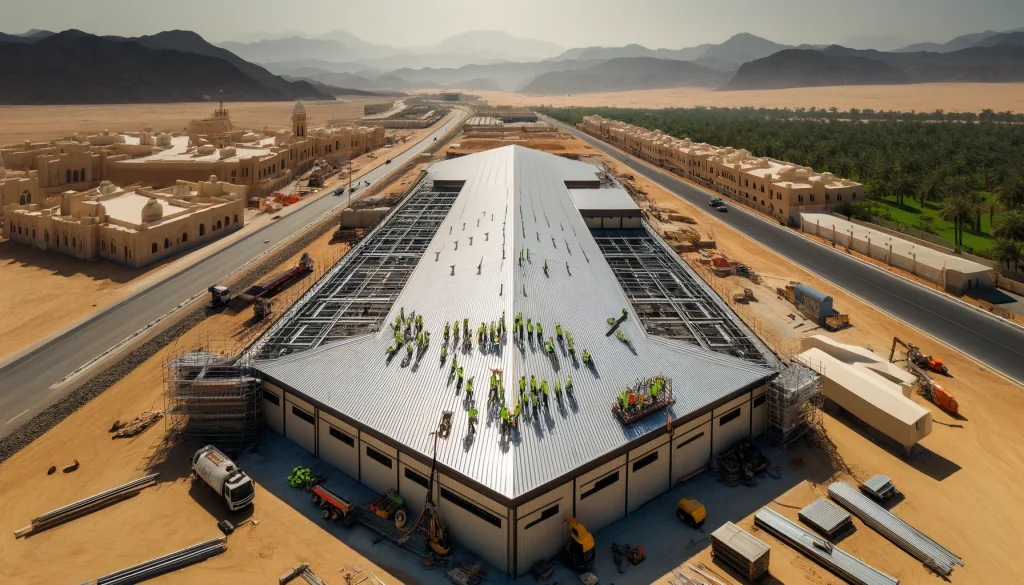
An example of a low-pitch building roof using standing seam panels. The continuous seams and gentle slope allow rainwater to drain efficiently, which is ideal for Oman’s occasional heavy rains. The sturdy interlocking panels also ensure the roof stands strong against high winds. In addition to heat and rain, Oman’s coastal areas bring in salty and humid air that can corrode lesser materials. However, standing seam panels made from aluminum or properly coated steel have excellent corrosion resistance. This is a significant advantage over uncoated metal or concrete roofs which might suffer in salty conditions. There’s also the matter of sand and dust – Oman’s deserts can produce dust storms that blast buildings with fine sand.
A standing seam metal roof has a smooth surface that doesn’t trap dust easily, and it can be hosed off or cleaned periodically without damage. The sloped nature of most standing seam installations also means sand will generally blow off or wash off with the next rain, unlike a flat concrete roof where dust might accumulate in puddles. All these climate considerations show that standing seam roofs are almost tailor-made for Omani conditions: they handle heat expansion, resist wind and rain, avoid corrosion, and remain relatively low-maintenance in dusty environments. It’s a key reason why they are becoming a go-to solution for long-term roofing performance in the region.
The Importance of Insulation in Standing Seam Roofs
Insulation is a critical component of any roofing system in Oman, and standing seam roofs are no exception. In fact, one of the reasons standing seam roof installation Oman is so popular is because it often goes hand-in-hand with high-quality insulated panel systems. When we talk about insulation in roofs, we’re referring to materials that reduce heat transfer – keeping the heat out of the building in the summer (and keeping heat inside if it’s cooler weather). Given Oman’s predominantly hot climate, the goal is to minimize the amount of outside heat that penetrates through the roof into the interior. Proper insulation under a standing seam metal roof can dramatically improve the indoor comfort and reduce air conditioning costs.

There are a few ways insulation is incorporated with standing seam roofs. One common approach for commercial or industrial buildings in Oman is using sandwich panels or insulated metal panels. These are factory-made panels that have a layer of rigid foam insulation (like polyurethane or PIR) sandwiched between two metal sheets – the top sheet is the standing seam profile and the bottom can be a liner sheet. These insulated panels combine the strength of metal roofing with excellent thermal insulation in one product.
Contractors simply install the panels, and the building gets both a roof and insulation together. Another approach, often used in residential or when retrofitting an existing roof, is to lay insulation batts or boards on the roof deck, then install standing seam panels over them. Rigid board insulation (like Polyiso boards) can be placed on a flat roof base, and then the metal panels go on top, with longer clips or fasteners bridging over the insulation. This creates a “warm roof” configuration where the insulation is continuous under the metal skin, preventing heat from seeping through.
Without proper insulation, a metal roof in Oman would get extremely hot under the sun and that heat would radiate downwards, making the top floor of a building unbearably warm. Insulation acts as a thermal barrier. It’s not just about comfort – it also protects the building materials. By keeping the metal roof’s underside cooler, insulation helps avoid big temperature differences that can cause condensation.
Condensation is when moisture in warm air hits a cool surface and turns to water; in roofs, this can happen at night if the roof cools and there’s humidity, leading to water droplets under the roof that can cause mold or rust. Insulation helps keep the underside of the metal closer to indoor temperature, reducing condensation risk.
Moreover, good insulation contributes to soundproofing – while rain on a metal roof can be loud, an insulated standing seam roof will dampen the sound, making the interior quieter during a rainstorm. For Oman’s buildings, investing in proper roof insulation means longer roof lifespan, significantly lower energy bills, and a more comfortable environment inside. It’s why reputable roofing services in Oman always emphasize not to skimp on insulation when installing a standing seam roof.
Energy Efficiency Benefits of Standing Seam Roofs
Energy efficiency is a major consideration in modern construction, and standing seam roofs excel in this area, particularly when adapted to Oman’s climate. A key energy efficiency benefit of standing seam metal roofing is its ability to reflect solar radiation. Many standing seam panels are available with cool roof coatings – special paint finishes with high reflectivity and emissivity.

In the blazing Omani sun, a cool-coated metal roof will reflect a large portion of the sun’s heat rather than absorbing it. This means the roof surface and the building interior stay cooler. The result is less reliance on air conditioning to maintain comfortable indoor temperatures. Over the life of the roof, the energy savings from reduced AC usage can be substantial. In fact, a standing seam roof with proper insulation can significantly cut cooling costs in a typical Oman home or business, as compared to a non-insulated concrete roof or a dark asphalt roof that absorbs heat.
Another aspect of energy efficiency is the reduction of what’s known as the urban heat island effect. In cities like Muscat, where many buildings and roofs absorb heat, the overall temperature in urban areas can rise. By using reflective metal roofing, communities can collectively reduce heat buildup, making the environment cooler and more sustainable. Standing seam roofs often qualify as “cool roofs” under green building certification programs for this reason.
Additionally, as mentioned earlier, the combination of a standing seam roof and good insulation provides a one-two punch for energy efficiency: the reflective surface minimizes heat gain, and the insulation stops whatever heat does get through from entering the living space. This synergy is why standing seam systems are frequently used in energy-efficient construction in Oman and other Gulf countries aiming for high performance buildings.
There’s also an environmental efficiency angle: metal roofs are eco-friendly in that most standing seam panels are made from recyclable materials and many contain recycled content. At the end of their long life, the panels can be recycled again, reducing construction waste. Contrast this with traditional roofing like bitumen or asphalt shingles, which often end up in landfills. Moreover, a cooler and well-insulated building requires less power for cooling, which in Oman often means lower electricity consumption from air conditioning. Given that electricity in Oman is often generated from natural gas or oil, any reduction in energy use also means a reduction in greenhouse gas emissions.
Thus, by installing a standing seam roof, an owner is not only saving on bills but also contributing to a greener future. For those interested in renewable energy, as noted, standing seam roofs are very solar-panel friendly. Attaching solar PV panels to standing seams is straightforward and does not compromise the roof’s integrity. So an energy-efficient metal roof can be paired with solar panels to further cut energy costs – taking advantage of Oman’s abundant sunshine. In summary, the energy efficiency benefits of standing seam roofs include lower cooling costs, improved indoor comfort, a reduction in environmental impact, and the ability to integrate with solar power systems, making them an excellent choice for sustainable building in Oman.
Standing Seam Roof Installation Oman Process
The process of installing a standing seam roof in Oman requires skilled workmanship and proper planning, but it follows a relatively straightforward sequence. First, the roof substrate or deck is prepared. For a new building, this could be a layer of plywood or metal decking on the rafters, or in the case of a steel structure, a series of purlins (horizontal beams) that the roof will attach to. If an old roof is being replaced, installers will ensure the base is sound, sometimes laying a new sheathing or at least a high-quality waterproof membrane over the existing structure.

This underlayment (often a breathable waterproof foil or felt) adds an extra layer of moisture protection under the metal and helps prevent any condensation from dripping inside. In Oman, where dust and occasional rain come into play, a good underlayment is important for a long-lasting roof.
Next comes the installation of clips and flashing. Metal flashing pieces (typically made of the same material as the roof) are placed along edges, valleys, and penetrations (like around chimneys or vent pipes) to ensure those areas will be water-tight. Then, for most standing seam systems, clips are fixed onto the deck or purlins at precise intervals. These clips are what will hold the panels, and they’re fastened with screws that go into the structure, but the clip itself will later be hidden by the panels.
Proper alignment and spacing of clips is crucial – this allows for even spacing of panels and accommodates thermal movement. Oman’s hot climate means the roofing crew will ensure the clips are the type that allow panels to slide a bit (floating clips) to handle expansion.
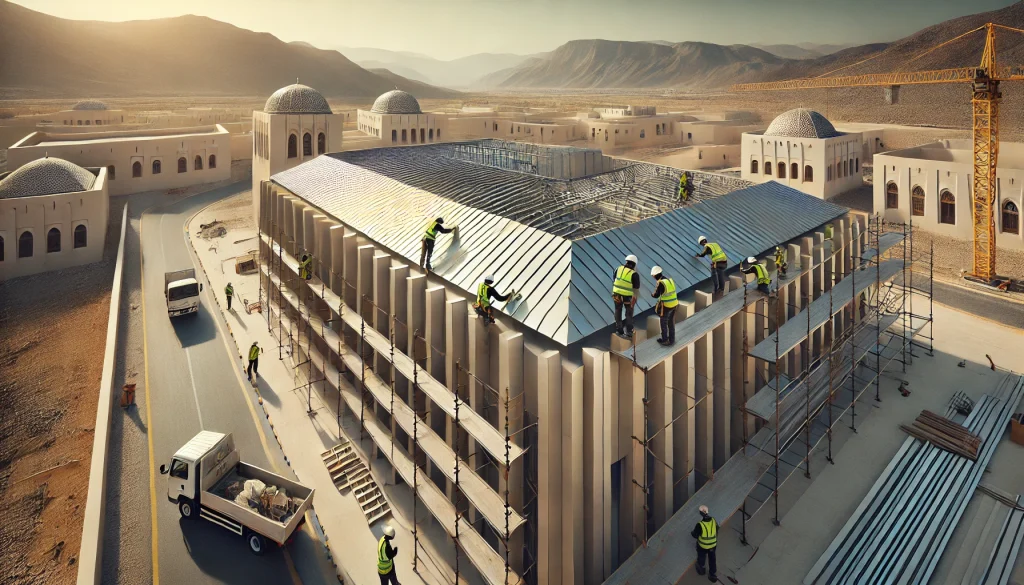
With the clips in place, the metal panels are ready to be mounted. Each standing seam panel is measured and cut to the required length (often panels are cut to run the full length from eave to ridge for a seamless look). The first panel is typically placed at one end of the roof, engaged with the edge flashing, and secured to the clips. Then the next panel is laid adjacent, with its starting edge hooking over the clips and overlapping the edge of the first panel. Depending on the system, the installer will either snap the panel into the clips/seam of the previous panel or use a special seaming tool to lock it in place.
This process continues across the roof: placing a panel, locking the seam, fastening, and so on, until the entire roof surface is covered in interlocked panels. One big advantage here is that no screws penetrate the top of the panels – all attachments are via the clips underneath the seams, so by the end of the installation, you have a pristine surface with no screw holes on top.
After all the main panels are installed, the crew finishes with ridge caps and final flashing. A ridge cap covers the joint at the very top where two slopes meet (for a peaked roof), ensuring that no rain can enter from the apex. Similarly, caps or trim pieces cover the edges at the eaves and gable ends, giving the roof a finished look and sealing off any gaps. The result is a continuous skin of metal that is securely fastened and sealed.
The installation process might differ slightly if using insulated sandwich panels (in which case panels are thicker and may attach differently), but generally the concept is the same. It’s worth noting that due to the precision required in standing seam installation Oman, it’s best done by experienced roofing professionals.
They will have the proper tools, such as seamers for mechanical lock panels, and safety equipment for working on the roof. In Oman, hiring a qualified roofing contractor is essential, because an improper installation could compromise the roof’s performance. When done correctly, the standing seam roof installation Oman process results in a roof that is not only visually appealing but also exceptionally durable against the elements.
Cost Considerations of Standing Seam Roofs in Oman
When planning for a standing seam roof installation Oman, understanding the cost implications is important. Generally, standing seam metal roofing is considered a premium roofing option. The upfront cost is higher than more common materials like asphalt shingles (which are less used in Oman, except on some villas) or corrugated metal sheets. In fact, you can expect a standing seam roof to cost perhaps 1.5 to 2 times more initially than a basic corrugated iron roof or other lower-cost solutions.

This higher cost comes from several factors: the material itself (metal coils with high-quality coatings), the sophisticated manufacturing of panels, the specialized labor and time for installation, and the necessary accessories (clips, flashings, etc.). Additionally, in Oman most standing seam roofs use high-grade materials (like thicker gauge steel or aluminum and durable paint coatings) to ensure longevity in the harsh climate, which can add to material cost.
However, while the upfront price is higher, the long-term value of a standing seam roof often makes it more economical over the lifespan of the building. One cost advantage is the low maintenance and repair expenses. Because standing seam roofs are so durable and resistant to leaks, you won’t be paying for frequent patch-ups or replacements. An asphalt or membrane roof might need significant maintenance or even re-roofing every 10-15 years in Oman’s climate, whereas a standing seam metal roof can easily last 40+ years with minimal intervention. If you spread the initial cost over those decades, the annualized cost can be quite competitive.
Moreover, if the roof incorporates good insulation or reflective coatings (as discussed earlier), you will save money on energy bills due to reduced cooling costs. Over a long period, those energy savings can offset a portion of the roofing investment. Some estimates suggest that the energy efficiency of a well-installed and insulated metal roof could save a homeowner in a hot climate up to 20% on cooling costs in the summer months.
There are also indirect cost benefits. For example, if you ever plan to sell the property, a standing seam roof can be a strong selling point, potentially increasing property value or at least making it more attractive to buyers who recognize they won’t need to worry about the roof for a long time. Insurance benefits are another angle: in some regions, having a metal roof can lower insurance premiums because of reduced fire risk and improved storm resistance – it’s worth checking if this applies with insurers in Oman, especially for commercial buildings. When budgeting for a standing seam roof in Oman.
it’s important to get quotes from experienced local contractors, as prices can vary based on metal type (steel vs aluminum, etc.), panel profile, roof complexity (lots of corners and angles will require more labor and flashing), and of course the size of the roof. Also, logistical factors such as the current price of metal, shipping (if materials are imported or coming from UAE), and whether on-site fabrication is used can influence cost. In summary, expect a higher initial cost for standing seam roofing but consider it a long-term investment in quality.
The roof will pay you back with its longevity, performance, and potential savings on maintenance and energy – a particularly important consideration in Oman’s environment where lesser roofs may fail and incur costs much sooner.
Metalart Space Frame: Expert Roofing and Cladding Solutions in Oman

When it comes to implementing a standing seam roof project in Oman, having a reliable and experienced contractor is just as important as choosing the right materials. Metalart Space Frame is a company that stands out in the Gulf market for its expertise in roofing and cladding solutions, including state-of-the-art standing seam roof installation Oman.
As a leading services company with a solid track record, Metalart Space Frame offers end-to-end roofing solutions – from design and manufacturing of roof components to professional installation on-site. What makes them a trusted name in the industry is their deep understanding of local construction needs and climate challenges. They have been involved in projects across the Middle East, and their presence in Oman means clients benefit from both international-grade quality and local know-how.
Metalart Space Frame specializes in standing seam metal roofing systems, among other products. They design and fabricate high-quality standing seam panels (as well as space frame structures and cladding panels) using advanced technology, ensuring that each panel meets strict standards for durability and fit. For a customer, this means peace of mind that the roof going on your building is engineered to perform. Their installation teams are well-trained in the specific techniques required for standing seam roofs – like proper clip alignment, seaming techniques, and maintaining perfect waterproofing details.
This expertise is critical, because even the best materials can underperform if installed incorrectly. With Metalart’s experienced installers, building owners can be confident that their roof will be put together correctly, on time, and safely. Moreover, Metalart Space Frame emphasizes the importance of insulation and energy efficiency in their roofing projects. They often recommend and incorporate high-efficiency insulated panels or insulation layers beneath the standing seam roofs they install, knowing how vital this is for Oman’s climate. By doing so, they aren’t just selling a roof, but a complete roofing system that improves a building’s performance.
Another aspect that Metalart brings is customization and design support. Because they are also a manufacturer, they can custom-make roofing panels to the exact length and shape required. If your project has unique architectural elements – say a curved roof section or a need for a specific color finish – Metalart Space Frame has the capability to deliver those specifications. They also coordinate closely on cladding solutions, meaning if your building facade or walls need metal cladding to match the roof or a consistent design, they can provide a holistic package. By choosing a specialized company like Metalart Space Frame in Oman, you essentially get consultants and contractors in one.
They can advise on the best type of standing seam panel for your project (snap-lock vs mechanical, steel vs aluminum, etc.), provide a competitive quote for materials and installation, and carry out the work with a high level of quality control. Their local portfolio includes commercial complexes, petrol stations, warehouses, and residential projects, showcasing versatility. This breadth of experience makes them a reliable services company for any roofing job – large or small. In a market where not every contractor is familiar with the nuances of standing seam systems, Metalart Space Frame’s dedicated focus on this roofing technology sets them apart as a go-to expert in Oman for durable, efficient metal roofing and cladding needs.
Conclusion and Key Takeaways
Standing seam roof installation Oman offers a winning combination of durability, weather resistance, and modern aesthetics, making it an excellent choice for a wide range of building projects. By understanding the benefits, types of panels, material options, and the importance of insulation, builders and owners can maximize the performance of their metal roofs in Oman’s challenging climate. Partnering with experienced professionals like Metalart Space Frame ensures that the roof is installed to the highest standards, providing decades of reliable service. To wrap up, here are the most important takeaways from this discussion:
- Unmatched Durability: Standing seam metal roofs are built to last for many decades in Oman, resisting intense sun, high winds, and corrosion better than most traditional roofing materials. Their concealed fastener design virtually eliminates common leak points.
- Climate Resilience: These roofs handle Oman’s climate extremes exceptionally well – they accommodate thermal expansion in high heat, stay water-tight in heavy rains, and stand firm against strong winds, making them ideal for local weather conditions.
- Energy Efficiency: When combined with proper insulation and reflective paint coatings, standing seam roofs significantly reduce heat transfer into the building. This leads to lower cooling costs and a more comfortable indoor environment, while also contributing to sustainability.
- Design Versatility: Standing seam systems offer flexibility in design – different metal materials (like steel or aluminum), a variety of colors, and the ability to adapt to complex roof shapes (including curves and low slopes). This allows architects in Oman to achieve both functional and visually appealing roof designs.
- Long-Term Value: Although the initial cost of a standing seam roof in Oman is higher than some alternatives, the long lifespan, minimal maintenance, and savings on energy and repairs make it a smart long-term investment for both commercial and residential properties.
- Professional Installation Matters: To reap all the benefits, expert installation is key. Companies like Metalart Space Frame provide specialized roofing and cladding services in Oman, ensuring that standing seam roof systems are installed correctly and perform optimally for years to come.
By keeping these points in mind, you can confidently choose a standing seam roof for your next project, knowing that it will protect your building effectively while adding value and efficiency in the long run. Whether it’s a new construction or an upgrade to an existing structure, standing seam roofing is a proven solution in Oman’s construction scene, delivering peace of mind and high-performance results.


