Mechanically Seamed Standing Seam 2025
Finding the right roof for your home can be a tough decision, especially when you want something that lasts and handles weather well. Mechanically seamed standing seam is known for its strong, weathertight hold on homes and businesses alike.
This article will explore how this durable metal roofing option could be the perfect solution to your roofing worries. Keep reading to discover if mechanically seamed is the roof you’ve been searching for!
Understanding Mechanically Seamed Standing Seam

Mechanically seamed metal roofing involves joining two metal panels together at the edges. Workers use a special machine to bend and seal these edges, creating a tight seam. This seam is strong and helps keep out water and air, making the roof very weather-tight.
Roofs with mechanically seamed standing seams are great for places that see lots of rain or snow.
These systems are especially good for low-slope or flat roofs where water might collect. The mechanical seam process requires skill but provides excellent protection against leaks.
Metal sheets get rollformed on-site or in a factory to make long panels that fit the roof’s size. Then, using seamers, experts fold the panel edges up and then press them together with a robotic seaming tool until they’re locked tight.
Key Features of Mechanically Seamed Standing Seam

Mechanically seamed metal roofing boasts precision engineering, tailored to withstand the harshest weather conditions. Its robust set of features—including enhanced dimensions, comprehensive product data and essential documentation—caters to both functionality and aesthetics for contemporary roofing solutions.
Dimensions
Standing seam metal roofs come in various sizes to fit different buildings. The MS2® panel has a rib height of 2 inches. You can get it in standard widths like 12, 16, and 18 inches.
If you need something else, custom widths from 12 to 24 inches are also available. This flexibility helps avoid problems like oil canning, where the metal looks wavy.
The Sheffield Metals profile called the SMI 1.5” Mechanical Seam is another option with its own size. It makes a seam that’s 1.5 inches high and gives you a finished panel that’s exactly 16 inches wide.
You can choose this for both steel and aluminum panels, making it versatile for different roof decks or open framing on sheds or homes.
Product Data
Understanding the specifics of a product is vital for making informed decisions. For mechanically seamed metal roofing, let’s delve into the product data that outlines its dimensions and technical specifications. The following HTML table presents a summarized view of the key product data for the MS2® mechanically seamed profile.
| Attribute | Details |
|---|---|
| Panel Seam Height | 2 inches |
| Standard Panel Widths | 12 inches, 16 inches, 18 inches |
| Custom Panel Widths | 12 inches to 24 inches |
| Gauges (Standard) | 24 |
| Gauges (Custom Ordered) | 22 |
| Material Type | Mechanically seamed metal |
| Finishes | PVDF resin-based paints |
| Color Options | Over 100, including standard, matte, Natural Matte®, and special order colors |
Professionals assess this data when planning installations to ensure compatibility with specific architectural requirements. Homeowners appreciate the variety of color options, all while knowing the core dimensions and material specifications, which contribute to the roofing’s durability and performance. The MS2® profile, with its 2\” rib height and customizable width options, stands as a versatile choice in the market.
Product Documents
Mechanically seamed metal roofing comes with a range of helpful documents. These guides and sheets make installation smoother and ensure long-lasting quality. You’ll find everything from trim and flashings to CAD details.
There are even videos to show you how to install your new roof right.
Looking for specs or maintenance tips? The product data sheets and care instructions have you covered. Want to know about safety? Check out the class A fire rating document. And if you’re planning for sunny weather, the solar reflectivity index is just what you need.
For any project, these documents keep things watertight and worry-free.
Color Options for Mechanically Seamed Roofing
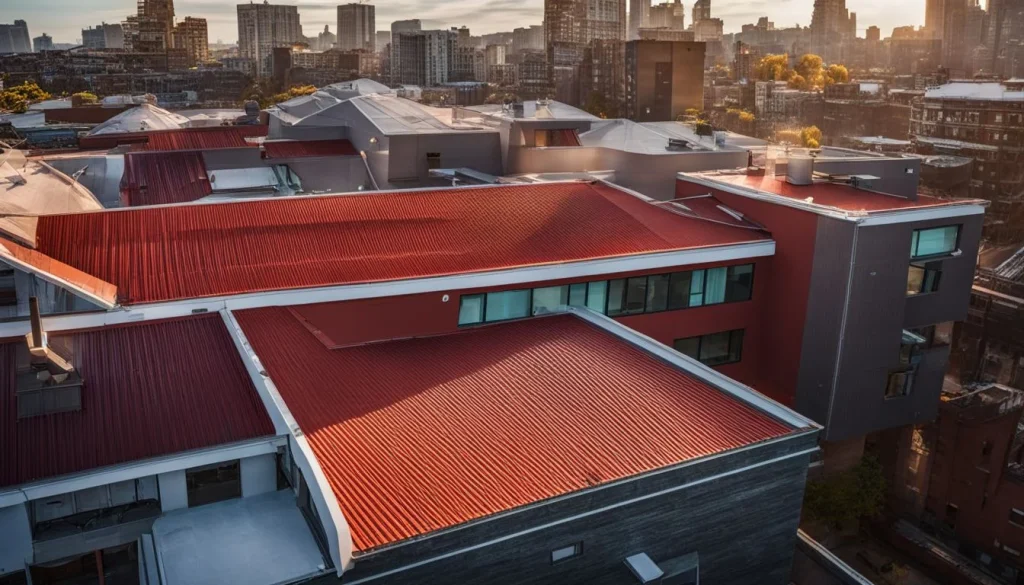
Discover the aesthetic versatility of mechanically seamed roofing with an array of color options tailored to enhance your project’s visual appeal—dive in to explore how these hues can elevate the design of any structure.
Standard Colors (PVDF)
Mechanically seamed standing seam panels shine in many hues, thanks to PVDF standard colors. They offer a robust palette of choices from bright Solar White and Stone White to earthy tones like Surrey Beige and Sierra Tan.
Lush greens include Sage Green, Hemlock Green, and Hartford Green, satisfying those who prefer natural vibes. Burgundy adds a dash of elegance, while Aged Patina gives a time-worn look with no wait.
Evergreen is deep and classic; Pre-Weathered Galvalume boasts an instantly aged metallic finish — all designed to withstand the elementsbeautifully.
Choosing these colors means your roof won’t just protect against weather; it will also add style for years to come. Their exceptional durabilitystems from polyvinylidene fluoride (PVDF), which wards off chalking and fading under the sun’s harsh rays.
This choice ensures that your building stays as vibrant as day one without constant touch-ups or concerns about color integrity over time. With these options at hand, creating an enduring aesthetic for any property becomes a simple task.
Matte Colors
Matte colors on metal roofing bring a sleek and modern look to any building. They offer an elegant appeal with less shine, reducing glare from the sun. You can choose from colors like Regal Blue or Slate Gray for a sophisticated touch, or go bold with Copper Metallic.
Matte finishes are perfect if you want your roof to stand out but not be too flashy.
These tones also blend well with different styles of architecture and natural surroundings. Imagine Ash Gray against a stone facade or Medium Bronze topping off a wooden cabin; the possibilities are vast! Ready to make a stronger statement? Look into Natural Matte® options which provide an even more unique texture to your roof’s appearance.
Next up is exploring these distinctive Natural Matte® choices..
Natural Matte®
Shifting from the vibrant hues of matte colors, Natural Matte® offers a subtle and sophisticated alternative for your roof. This finish stands out with its low-gloss look, lending an understated elegance to any structure.
Customers seeking something different will find an array of options in the Natural Matte® range. The soft sheen harmonizes with various architectural designs while providing the same robust protection as shinier finishes.
Choose your perfect shade using available tools such as color cards or online visualizers. These resources make it easy to picture how a Natural Matte® finish will enhance your home’s appearance.
With custom color matching, you can achieve the exact look you want for your standing seam metal roofing. This option ensures that every detail reflects your personal style and meets all functional needs—from weathertight warranties to water-resistant performance.
Special Order Colors
Looking for something extra special? Our special order colors offer that unique touch to your roof. You can choose from a wide range of colorsnot typically stocked. These options give depth, texture, and personality to metal roofing systems.
With these custom hues, you can create a look that truly stands out in your neighborhood.
Our color and product visualizer tool is here to help too! Before deciding on a color, use the tool to see how different selections might appear on your home. Mix and match textures, finishes, and panel types with ease.
Get creative—your perfect shade awaits! Moving forward: How does mechanically seamed metal roofing compare with other profiles?.
Comparison: Snap-Lock vs. Mechanical Seam vs. Nail Strip

When selecting the ideal standing seam for your project, comprehending the distinct operational and installation differences between snap-lock, mechanical seam, and nail strip profiles is crucial.
This decisive comparison will chart a clear path through their unique attributes and applications, ensuring you make an informed choice tailored to your specific roofing needs.
Mechanical Seam Standing Seam Roofing Profiles
Mechanical seam standing seam roofing profiles are the tough guys on the block. They come with a robust 2″ rib height that declares strength right off the bat. You can pick them in standard widths of 12″, 16″, or 18″.
Need something tailor-made? Custom widths from 12″ to 24″ have got you covered.
Let’s talk about their endurance during storms and heavy snow. These panels laugh in the face of harsh weather, especially when rollformed into MS2®’s mighty profile. They cling to your roof with a grip only special machines can muster, sealing up tight with no room for leaks or wind uplifts.
Forget those weak spots where problems like to sneak in—mechanical seams lock them out for good!
Snap-lock Standing Seam Roofing Profiles
Snap-lock standing seam roofing profiles use a concealed fastener system. This design keeps screws out of sight and protects them from the elements. Installation is quicker because no hand or mechanical seaming is needed on-site.
These profiles create a tight, weather-proof seal over your roof. They work well for many different roof slopes and are often seen on both houses and business buildings.
You can tailor the panel sizes of snap-lock roofing to fit your project perfectly. People like this choice for its mix of easy installation and solid performance against rain and wind.
Plus, with customizable options, you get exactly what you need without extra waste or cost—making it a smart pick for DIYers who want to update their roofs with quality materials that last.
Nail Strip / Fastener Flange Standing Seam Roofing Profiles
Nail strip roofing profiles offer a fast and efficient way to install metal roofs. They come with pre-punched flanges where you fix them directly to the roof deck. This system is less complex than mechanical seam roofing, making it a good choice for those who want a straightforward installation.
With nail strips, there’s no need for specialized tools or extensive training. However, these profiles might not be right for extreme weather areas because they can’t handle high winds like mechanically seamed options.
One downside is that nail strip profiles can follow the imperfections in the roof deck. If your decking isn’t perfectly flat, it could show on your finished roof and affect how well it performs.
Always check if this type of standing seam will meet your needs before choosing it over others. Now let’s take a closer look at SMI 1.5” Mechanical Seam Profile details..
Detailed Overview of the SMI 1. 5” Mechanical Seam Profile
Delving into the SMI 1.5″ Mechanical Seam Profile, we uncover a robust solution tailored for those seeking precision and durability in metal roofing systems—stay tuned to explore how this profile stands out in the landscape of modern roofing technologies.
Uses, Pros, Cons
The SMI 1.5” Mechanical Seam profile is a standout choice for roofing. It’s built to handle tough weather and delivers reliable performance.
- This profile is perfect for places that get extreme weather like heavy snow, strong winds, or lots of rain.
- Architects love it for its flexibility in design, making it a go-to for both low-slope and steep-slope roofs.
- It shines in many building types, from schools to warehouses, because of how well it can be tailored to fit different structures.
- The SMI 1.5” profile creates a super tight seal against the elements, keeping water and wind out better than other roofs.
- You can trust this roof to last through harsh conditions because of its strong build and performance.
- Building owners can opt – in for special warranties that promise even more protection against leaks.
- If your building doesn’t have the right support underneath, like solid sheathing, this might not be the roof for you.
- This isn’t a weekend DIY project; you’ll need skilled professionals to install it properly.
- For open – framed structures, such as some porches or sheds, you should probably pick a different roofing option.
Specifications
Understanding the specifications of the SMI 1.5” Mechanical Seam profile is essential for professionals in the industry. It ensures the right application for durability, aesthetics, and performance. Here’s a detailed breakdown of its specifications:
| Feature | Specification |
|---|---|
| Rib Height | 1.5 inches |
| Standard Widths | 12″, 16″, 18″ |
| Custom Widths | Available from 12″ to 24″ |
| Material Gauges – Standard | 24 Gauge |
| Material Gauges – Custom Ordered | 22 Gauge |
| Fastening System | Concealed Fasteners |
| Minimum Roof Slope | 1/12 |
| Substrate Requirement | Solid substrate with underlayment |
| Warranty – Weathertight (Optional) | Available for commercial structures |
| Warranty – Paint/Finish | 40-Year Transferable PVDF |
Crafted with precision, the SMI 1.5” Mechanical Seam profile integrates performance with longevity. Architects and contractors recognize its value for high-end commercial and residential projects. Next, let’s delve into when to utilize this robust metal roofing solution.
Engineering, Testing, & Approvals
Engineers put the SMI 1.5” Mechanical Seam profile through tough tests. They checked how well it stands up to strong winds, leaks, and rain on different decks and materials. More tests looked at how it stays underwater, takes hits, and deals with fire.
After all that, big names like the Florida Building Code and Texas Department of Insurance said yes to it.
This means you can trust this roofing to keep your building safe and dry. Next up: let’s see why the SMI 1.5” Mechanical Seam Profile could be the right choice for your project!

When to Use the SMI 1. 5” Mechanical Seam Profile
Choose the SMI 1.5” Mechanical Seam Profile for roofs with gentle slopes, even as low as 2/12 pitch. This profile works well with the added in-seam sealant to prevent water entry.
It’s also perfect for hydrostatic roof systems that can handle standing water and have slower drainage. Big or small projects benefit from its design, whether it’s a cozy home or a towering office building.
This mechanical seam option comes with commercial weathertight warranties, making it reliable for businesses seeking long-term protection. Trust its performance on different materials like insulation and shingles since it’s engineered for varied deck assemblies.
Pick this profile when you need a roof that stands up to weather challenges and meets high standards on diverse builds.
When NOT to Use the SMI 1. 5” Mechanical Seam Profile
Avoid the SMI 1.5” Mechanical Seam profile if you can’t get a seaming tool. These tools are essential for installation, and without them, you won’t be able to install this type of roof correctly.
Also, stay away from using it on buildings with open frames. This profile demands a solid decking base to work safely and effectively.
Don’t choose this profile for low-slope roofs unless you plan to use continuous in-seam sealant. Without this sealant, water could leak under the seams during heavy rain or snow melt-off.
Keep in mind that extra labor costs mean this isn’t the best choice for tight budgets either. Professional skills are necessary for installing these roofs; they’re not great projects for do-it-yourselfers.
If you live where weather hits hard—like very snowy or windy areas—it’s probably best to pick another roofing option suited to withstand those conditions.
Let’s move on and take a look at some real-life examples of jobs well-done using the SMI 1.5″ MS..
Review of Completed Projects Using the SMI 1. 5″ MS
Moving from the considerations of when not to use SMI 1.5” Mechanical Seam Profile, let’s look at the successes it has had. Builders have completed many projects where this roofing system exceeded expectations.
For example, large commercial buildings now have roofs that can withstand harsh weather thanks to the SMI 1.5″ MS. The mechanically seamed metal roofing proves most weather-tight among standing seam systems.
Schools and warehouses benefitted greatly from its installation too. With a minimum slope requirement of 1/12, these structures now boast long-lasting protection overhead. Users picked from a wide array of colors with finishes using PVDF resin-based paints for an aesthetic touch on top of durability.
Each project highlights how vital it is to choose the right profile for specific needs, and in these cases, the SMI 1.5″ MS was a perfect match.
Conclusion on the SMI 1. 5” Mechanical Seam Standing Seam Profile
The SMI 1.5″ mechanical seam profile stands out as a rugged, tight choice for many roofs. Its design beats extreme weather and keeps buildings safe. Ideal for low slopes, it’s a go-to for durability.
For those seeking reliability, this roofing system offers peace of mind with its strong seams and solid performance. Trust in the resilience of mechanically seamed standing seam roofing to protect your space year after year.
FAQs
1. What is a mechanically seamed standing seam?
A mechanically seamed standing seam is a type of metal roofing where panels are joined together with seams that are folded and locked by a machine—the rollforming process.
2. Can you use insulation with this type of roofing?
Yes, indeed! You can definitely use insulation like polyisocyanurate under mechanically seamed metal roofs to keep your space warm in winter and cool in summer.
3. How long does this kind of roof last?
With proper installation and maintenance, mechanically seamed standing seam roofs can last over 50 years—they’re really tough!
4. Is it okay to walk on this roofing for repairs or cleaning?
Be careful here—while some are strong enough for walking, always check with the manufacturer or an expert before stepping on any roof, including mechanically seamed ones.
Click for detailed information about Mechanically Seamed Standing Seam.